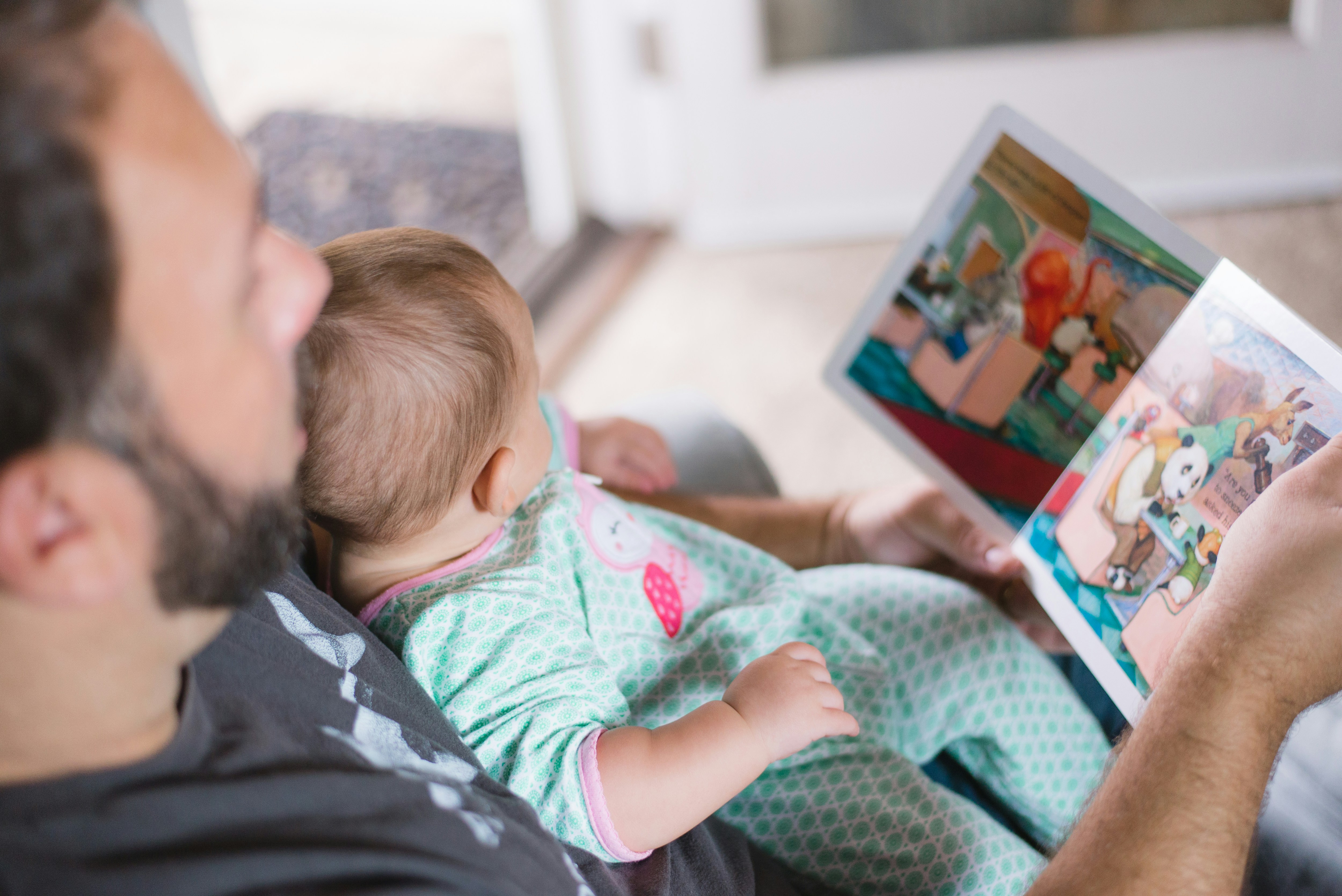
There's a common myth in perinatal mental health: that it's a "moms" topic, that postpartum depression and anxiety are things only new and expecting mothers go through.
But perinatal depression and anxiety can affect dads and non-birthing parents too, and honestly, when you think about it, that makes complete sense. Bringing a new person into the world is one of the most life-changing experiences a person can go through, no matter which parent you are. According to UNICEF, research suggests that as many as 1 in 10 fathers experience postnatal depression, and like with moms, that number is likely an undercount, since so few dads talk about it openly. This Father's Day, I want to talk about something that doesn't get talked about nearly enough.
The Learning Curve Nobody Warns You About
Whether you've been planning for this moment for years, it happened sooner than expected, or it wasn't planned at all, the news of a pregnancy, or suddenly having a tiny new person depending on you, brings up lots of emotions. Some moments are overwhelming in the best way: pure joy. Others are overwhelming in a harder way: exhaustion, uncertainty, the sense of being in over your head.
I often tell my clients: the learning curve for new parents is steep. There's so much to figure out, reading a baby's non-verbal cues, adjusting routines, and then adjusting them again a few weeks later because babies grow and change so fast. Just when you feel like you've "figured this out," you're back to square one. That constant recalibration can leave any parent feeling like they're always playing catch-up.
Becoming a parent has a way of bringing your own childhood back into focus: the good parts, the hard parts, and everything in between. Suddenly you're not just figuring out how to take care of this new little person, you're also looking back at how you were raised, and asking yourself what you want to carry forward, what you want to do differently, and what kind of parent you want to be. That kind of reflection can be really valuable, but it's also a lot to process on top of everything else, and it's completely normal for it to bring up its own emotions.
The Weight Dads and Non-Birthing Parents Carry
Dads and non-birthing parents often carry an additional, specific kind of pressure: being "the provider." In the best-case scenario, there are a few weeks of paternity leave. Often, though, that's not even an option, and many fathers are back at work within days of their baby's birth, with little space to process what just happened to their family, or to themselves.
If you're a dad in Fairfax, Arlington, McLean, Reston, or anywhere else in Northern Virginia, this pressure can feel especially heavy. A lot of the careers that bring families to this area, including government, defense, consulting, tech, and other demanding fields, already come with long hours, long commutes, and high expectations on an ordinary day. Layer newborn sleep deprivation on top of that, and exhaustion takes on a whole new meaning.
And there's not much open conversation about any of this. Research consistently shows that men and non-birthing parents are less likely to seek mental health support than women, which means a lot of this gets carried silently.
When All the Attention Goes to the Baby
In the early weeks, it makes sense that so much focus goes to the baby, and to the bond between baby and the parent who gave birth. That bond is real, important, and strong. But it can also leave dads and non-birthing parents feeling like they're on the sidelines of their own family's story, left to figure things out on their own, without anyone checking in on them.
For many families in Northern Virginia, a region full of people who moved here for work, there's an added layer to this: no grandparents nearby, no built-in village, no one dropping off a casserole. Dads and non-birthing parents often end up quietly filling those gaps, on top of everything else they're carrying.
What Postpartum Depression Can Look Like in Dads
The symptoms of perinatal depression in dads often look similar to what we see in moms:
It can also show up in ways that are easier to miss or dismiss: increased substance use, more conflict with a partner, or pulling away from caregiving altogether.
Certain things raise the risk: a personal history of depression, financial stress, unemployment, or a lack of support from family and friends. If there are health complications for mom or baby, that adds even more weight to an already heavy load.
It's also worth knowing that postpartum depression doesn't always show up right away. It's most common in the first three to six months after birth, but it can also surface later, sometimes a year or more into parenthood.
If any of this sounds familiar, for you or for your partner, you don't have to figure it out alone. I offer free 15-minute consultations for parents in Virginia.
Book a Free ConsultationWhat's Actually Happening in a New Father's Body
Something I find genuinely fascinating, and validating for the dads I work with, is that this isn't just "in their head." A research review published by the National Library of Medicine's National Center for Biotechnology Information (NCBI) describes real hormonal changes that fathers go through during pregnancy and in the months after their baby arrives. UNICEF points to the same thing, noting that fathers' hormones can begin shifting as early as their partner's pregnancy, and that some research has even found changes in fathers' brain structure during this transition.
Many of these changes seem designed to help fathers bond with their babies. For example, a drop in testosterone after birth has been linked to less aggression and a stronger emotional response to a crying baby, both of which may deepen a father's attachment. Rising estrogen levels have been connected to more engaged, hands-on parenting, and shifts in other hormones like cortisol, vasopressin, and prolactin may also help strengthen the bond between father and child.
Here's the other side of that coin, according to the same review: those same hormonal shifts may also make some fathers more vulnerable to postpartum depression, or make existing symptoms harder to manage.
Why It Matters for the Whole Family
That same NIH-published review also looked at what happens when depression in fathers goes unaddressed, and the findings are worth sitting with.
Infants of fathers experiencing depression were found to show higher levels of distress, and children growing up with a father navigating depression face a higher risk of developing emotional or behavioral difficulties of their own. Researchers also found connections between paternal depression and increased aggression in children under four, as well as delays in behavioral, emotional, and social development by ages four and five.
Most of this research looked at depression in fathers broadly, not postpartum depression specifically, but the same patterns are likely to apply. The takeaway is simple: when a father is doing okay, the whole family feels it. And when he's struggling, even quietly, even without a name for it, everyone feels that too.
What I See in My Practice
In my work with new parents, I often see this play out in couples where one partner is clearly struggling, but it's gone unnamed for months. Sometimes it's the mom who brings it up: noticing her partner seems more irritable, more distant, or "not himself" since the baby arrived. Sometimes a dad finally puts words to something he'd been feeling for a long time but didn't know how to talk about, or didn't think he was "allowed" to.
A family is a unit. How one person is doing affects everyone else in that unit, and that includes dads and non-birthing parents, even when the spotlight tends to point elsewhere.
Why Therapy Helps
Dads and non-birthing parents deserve the same thing moms do: a space to feel heard, supported, and validated in this transition. Therapy offers a private, confidential place to talk through what's actually going on, without judgment, and without needing to have it all figured out first.
With the right support, this season doesn't have to feel like something you just have to push through on your own. You can feel like yourself again.
Support for Dads and Partners in Northern Virginia
I offer telehealth therapy for parents across Fairfax, Arlington, McLean, Reston, Alexandria, and the rest of Northern Virginia, including dads and non-birthing parents navigating the postpartum period. I accept most major insurance plans for Virginia clients through Headway.
If anything in this post sounds familiar, for you, or for your partner, a free 15-minute consultation is a good place to start.
Ready to talk it through? A free 15-minute consultation is a low-pressure place to start.
Book a Free ConsultationOr email me at geraldine@kuphalMFT.com

Sources: National Library of Medicine (NCBI) – Paternal Postpartum Depression · UNICEF – Can Men Get Postnatal Depression? · Postpartum Support International – Help for Dads