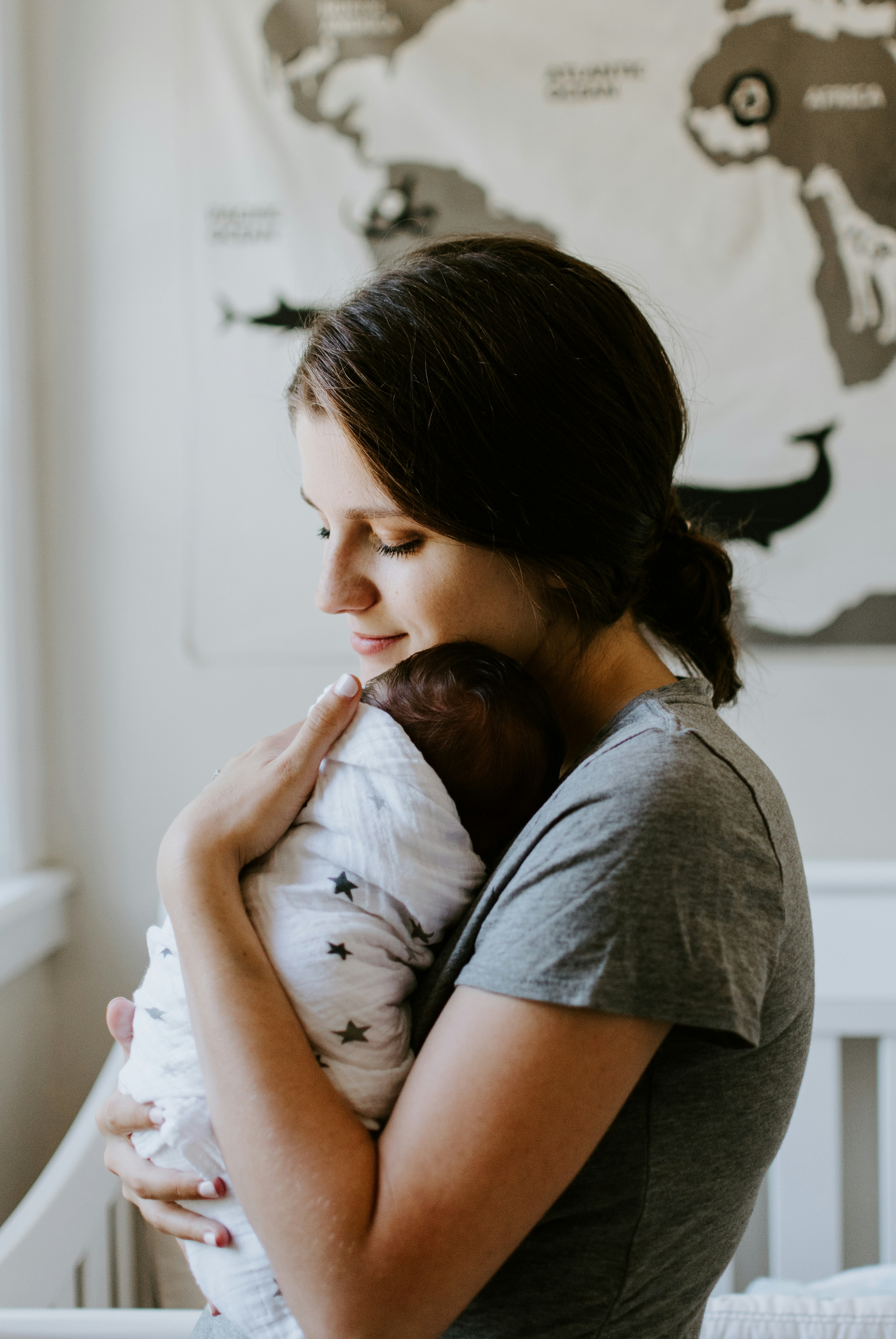
The weeks after having a baby are supposed to feel like the happiest time of your life. And sometimes they do. But a lot of the time, they feel overwhelming, raw, and confusing, and nobody warned you it would feel quite like this.
If you're a new mom in Fairfax, Arlington, McLean, Reston, or anywhere in Northern Virginia, and you're wondering whether what you're feeling is normal, this post is for you. As a perinatal mental health therapist, I talk with moms about this all the time, and I want to break it down in a way that's actually useful.
First, let's talk about what your body is going through
Here's something I say to every new mom I work with: your body just went through a hormonal revolution. That's not an exaggeration.
During pregnancy, your body produces enormous amounts of hormones, including HCG (the one that causes morning sickness),, estrogen, progesterone, and oxytocin, all of them working together to grow your baby, prepare your body for birth, and get ready for breastfeeding.
Then your baby arrives, and everything shifts overnight.
Oxytocin in particular plays a fascinating role in those first hours after birth. Right after delivery, both you and your baby experience a massive oxytocin surge, not by accident, but by design. This hormonal peak exists specifically to help you bond, to make you want to stay close to your baby, to make sure your baby can find your breast on their own. It's a survival mechanism that's been with us since the beginning of human life.
Prolactin kicks in for milk production. Cortisol rises when you're stressed and sleep-deprived. And all the hormones that were sky-high during pregnancy drop rapidly after delivery.
All of this is happening in your body while you're also learning to care for a completely dependent human being, probably on very little sleep. So when you feel emotional, exhausted, or not quite yourself, there is a very real biological reason for that.
Baby Blues: What's normal in the first two weeks
Between 70 and 80 percent of new mothers experience what's called the "baby blues." That means if you're feeling weepy, irritable, overwhelmed, or emotionally all over the place in the first couple of weeks after giving birth, you are in very good company.
Baby blues typically peak around day 3 to 5 postpartum and last up to two weeks. The key word here is fluctuation. You might feel completely overwhelmed one hour and then genuinely happy when your baby smiles at you the next. You cry at a diaper commercial. Then you feel okay. Then you cry again.
Baby blues look like:
The key difference: baby blues respond to small positive things. You sleep a bit more and feel a little better. Something sweet happens and you smile. The cloud lifts, at least temporarily.
When it's more than baby blues: Postpartum depression
If two weeks have passed and you're still feeling this way, or if the feelings are getting more intense rather than less, it's time to pay closer attention.
Postpartum depression affects 1 in 8 women nationally. In Northern Virginia, where many moms are also managing high-pressure careers, long commutes (even if just to a home office), and often limited family nearby, the isolation and stress can make it even harder to recognize and reach out.
Postpartum depression and baby blues can look similar on the surface. The difference is in the constancy and intensity.
A heaviness that's there most of the day, most days — it doesn't ease up when something nice happens.
Things you normally enjoyed just don't feel like anything anymore, including moments with your baby.
You're exhausted but can't sleep — or you sleep and wake up just as depleted.
Not feeling the bond you expected. One of the hardest things to admit — and one of the most important.
"I should be happy." "I'm not a good mother." These thoughts are the depression talking, not the truth.
"My baby would be better off without me." If this is happening, please reach out — you are not alone.
If you're reading this and recognizing yourself, you don't have to figure this out alone. I offer free 15-minute consultations for new and expecting moms in Virginia.
Book a Free ConsultationPostpartum depression affects partners too
This is another thing nobody talks about enough: postpartum depression isn't only a mom thing.
Approximately 4% of fathers develop postpartum depression in the first year, and that number climbs significantly by the time a child is 12. Partners often don't express it the same way. Instead of sadness, it tends to show up as stress, irritability, anger, and pulling away. And when one parent is struggling, it affects the whole family, the other parent carries more, the baby gets less of both of them, and the dynamic becomes harder for everyone.
If your partner seems withdrawn, short-tempered, or not quite themselves since the baby arrived, this might be worth a conversation.
You don't have to wait until it gets worse
One of the things I want Northern Virginia moms to know is this: postpartum depression is not a character flaw, a failure, or a sign that you're not cut out for this. It has been documented in women of every culture, every income level, every age, and every background. Your brain and your hormones are going through something genuinely hard.
And it is very treatable. Therapy works. There are different approaches, including talk therapy, EMDR, and others, and in some cases medication is helpful too. The important thing is not to go through it alone and not to wait until you're barely functioning.
Untreated, postpartum depression can last months or years. With the right support, most women recover fully.
Therapy for postpartum depression in Fairfax, VA
I offer telehealth therapy for new moms in Fairfax, Arlington, McLean, Reston, Alexandria, and across Northern Virginia. As a Certified Perinatal Mental Health Specialist (PMH-C) and EMDR-trained therapist, perinatal mental health is at the core of my work.
I accept insurance for Virginia clients including CareFirst BCBS, Aetna, Kaiser Permanente, Quest Behavioral Health, and Carelon Behavioral Health through Headway. Sessions happen by telehealth, so you can attend from home, during nap time, without arranging childcare or making a drive to Tysons or Bethesda.
If you've been reading this and recognizing yourself, or someone you love, I'd encourage you to reach out. A free 15-minute consultation is a good place to start.