
This week is the International OCD Foundation's OCD Awareness Week (October 11–17). Every year, the IOCDF puts out a set of graphics to help correct the record on what OCD actually is — and I wanted to use the week to share a few of them here, along with my own perspective as a therapist who treats OCD, including perinatal OCD, every week.
OCD Is Not an Adjective
"I'm so OCD about my desk" is one of the most common things people say about themselves — usually about being tidy or particular. It's also one of the most misleading. OCD is a serious, often debilitating mental health disorder, not a personality quirk, and the IOCDF estimates it affects up to 240 million people worldwide.
Clinically, OCD has two parts: obsessions — intrusive thoughts, images, or urges that show up uninvited and cause real distress — and compulsions — behaviors or mental rituals done to try to neutralize that distress or prevent something bad from happening. The person having them usually knows the thoughts don't make sense, or that the rituals are more than the situation calls for. That almost-always-present insight is part of what makes OCD so exhausting: you can be fighting your own brain and losing, in full awareness that it's a losing fight.
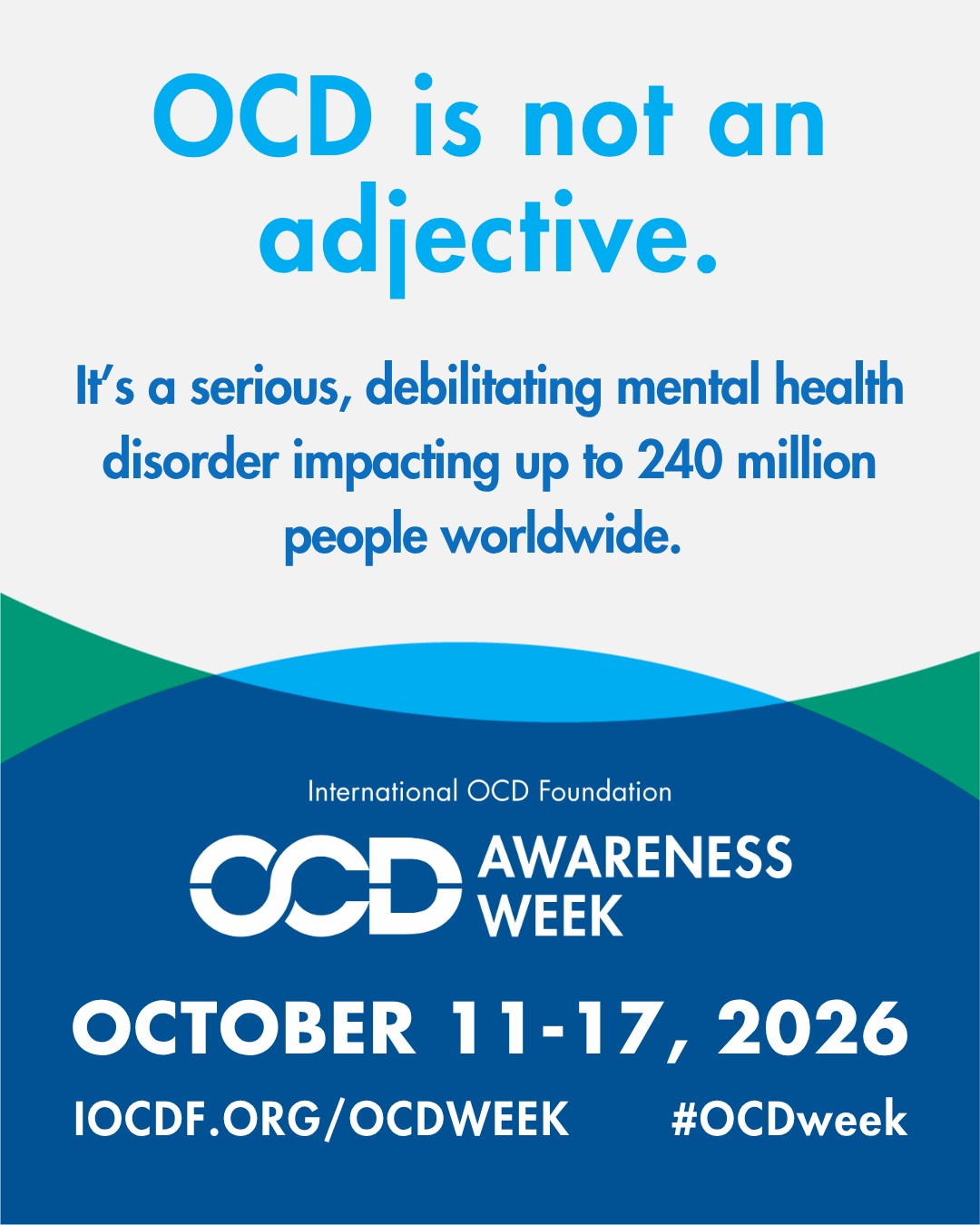
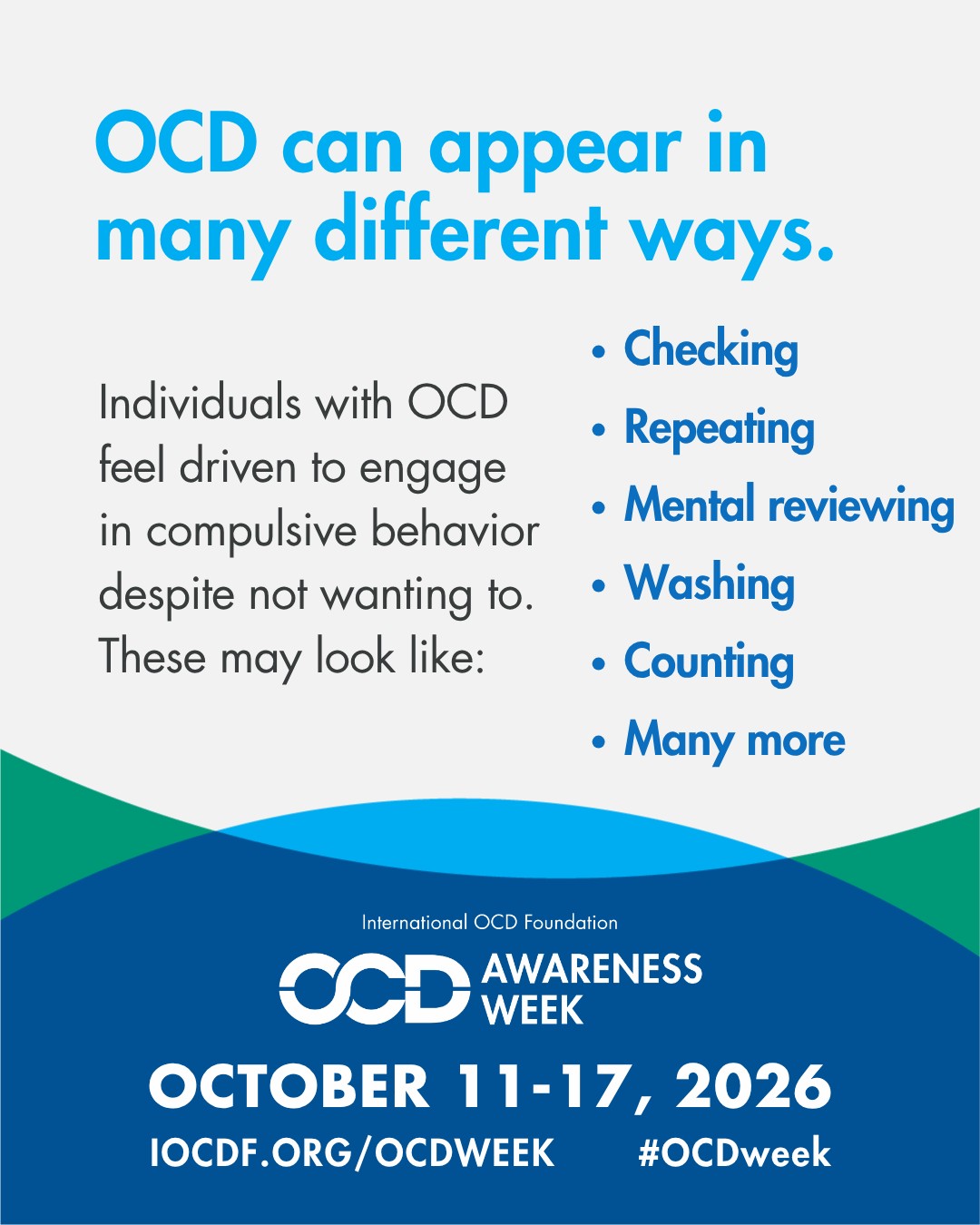
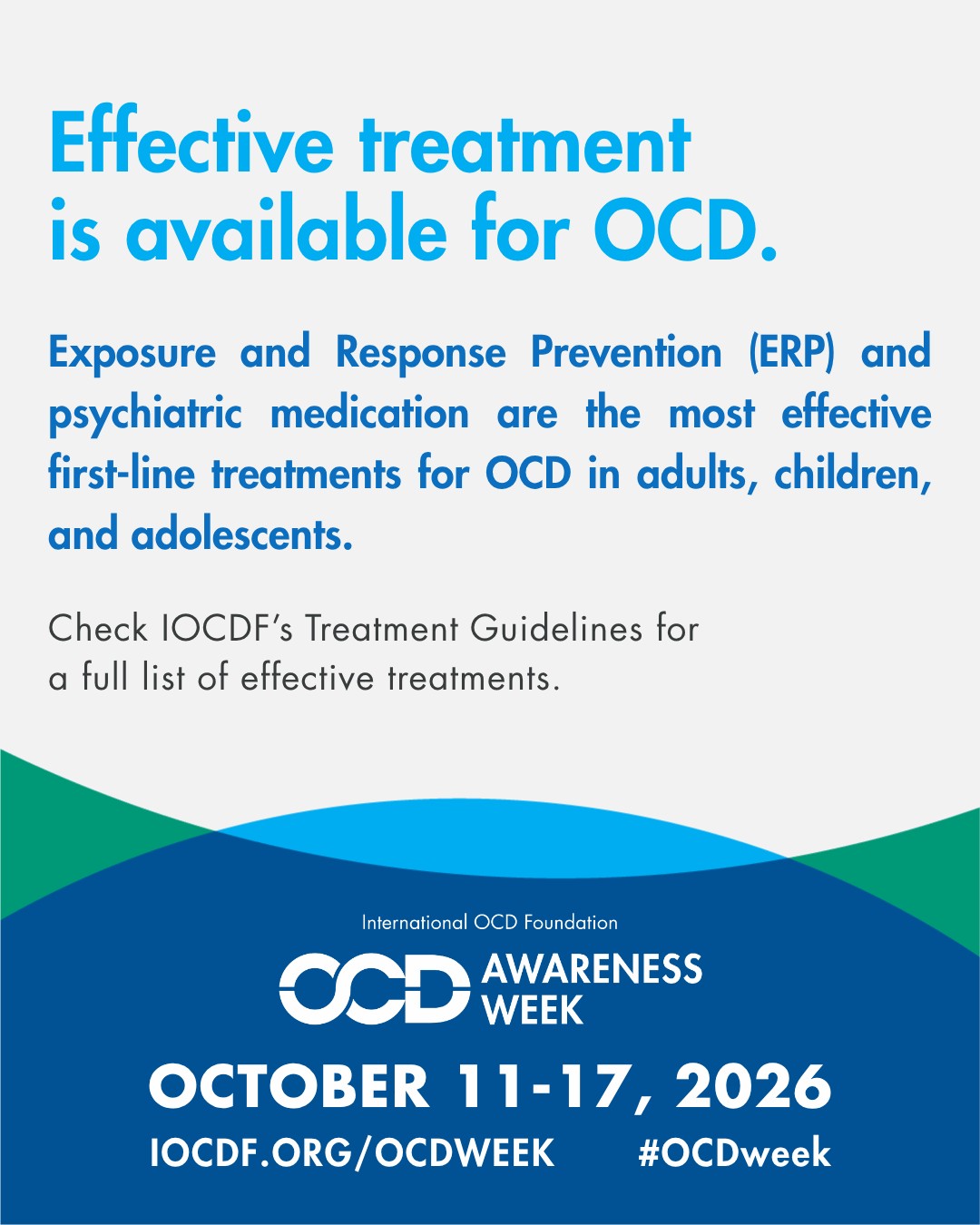
Graphics courtesy of the International OCD Foundation, OCD Awareness Week · #OCDweek
It Shows Up in More Ways Than People Expect
When people picture OCD, they usually picture hand-washing or a need for symmetry. Those are real presentations — but OCD can also look like mental reviewing (replaying a moment over and over to make sure nothing "bad" happened), checking (locks, stoves, messages, your own body), counting or repeating rituals, and intrusive thoughts with no visible compulsion at all — just a relentless, looping fear that never gets acted out, only endured.
If you're trying to conceive, already pregnant, or parenting, and you've noticed intrusive thoughts that seem to come out of nowhere, an urge to constantly check, a need for reassurance from your partner or doctor, or spiraling anxiety about keeping your baby or kids safe — this is something I treat, and it's treatable. I've written more specifically about how perinatal OCD shows up for moms in Northern Virginia and how therapy helps. Therapy can move you from constant worry to living with confidence.
Schedule a Free Consultation →I also work with the people who love someone with OCD. Being a partner, parent, or adult child of someone living with OCD carries its own weight — learning how to support your loved one without accidentally feeding the OCD cycle through reassurance or accommodation. I can help you navigate that relationship while supporting their recovery.
Schedule a Free Consultation →Effective Treatment Is Available
This is the part I most want people to walk away with: OCD responds well to treatment. Exposure and Response Prevention (ERP), a specific form of Cognitive Behavioral Therapy, and psychiatric medication are the first-line, evidence-based treatments for OCD in adults, children, and adolescents — and in my experience, most people see real, measurable relief once they start. The hardest part is almost always the first phone call, not the therapy itself.
You don't have to keep fighting your own mind in silence. Naming it out loud, to someone who's heard it before, is usually the turning point.
If you've been carrying intrusive thoughts you've never said out loud — about your baby, about safety, about something "bad" happening because you didn't check one more time — I want you to know this is common and highly treatable, and you don't have to figure it out alone.
← Back to all posts